Strategy · 2025-06-10
Why the best agencies sell the diagnostic before the engagement
A diagnostic-first sales process qualifies better, closes faster, and produces fewer scope disputes. Here is how to structure it without slowing down your pipeline.
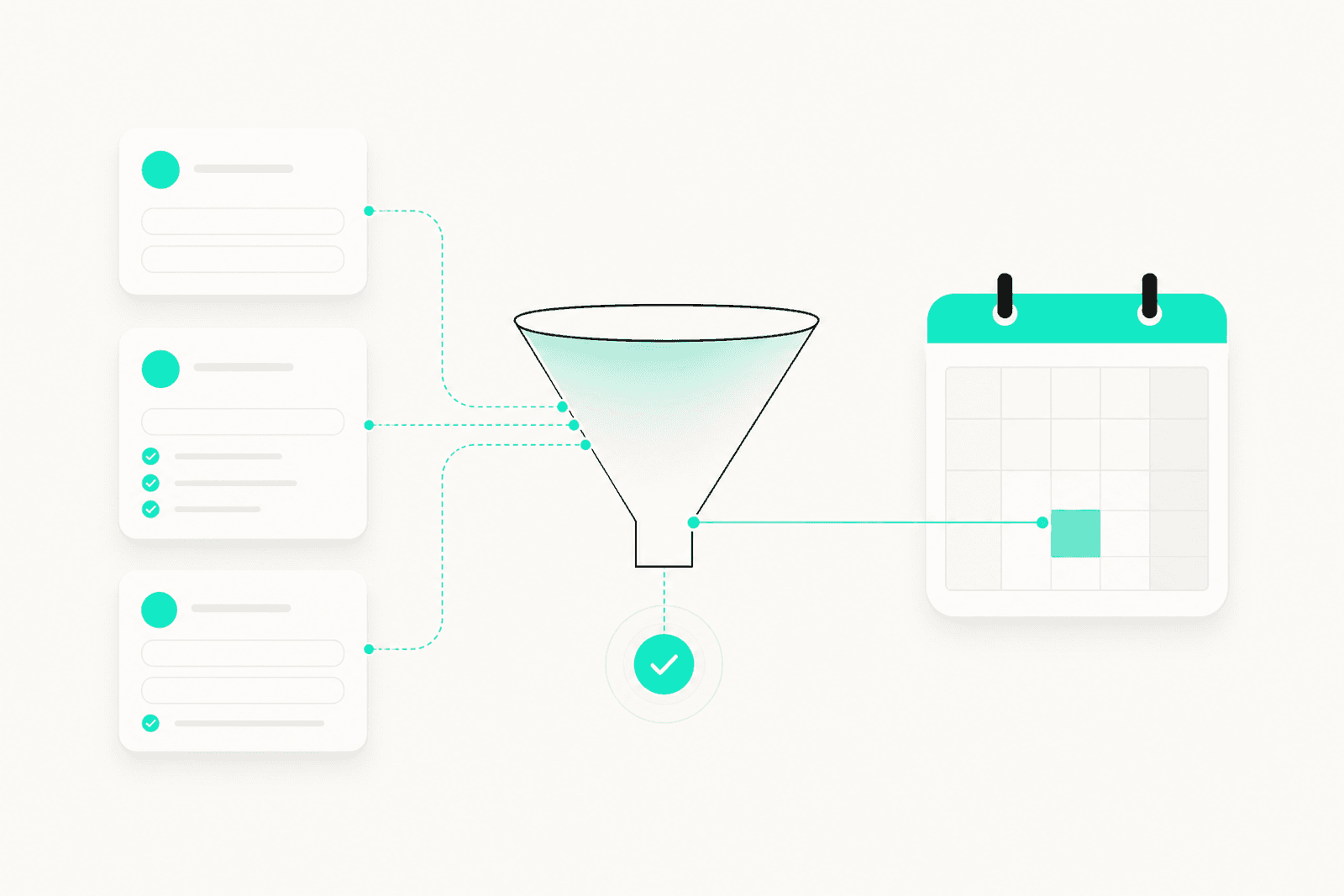
The traditional agency sales cycle has a built-in inefficiency: the agency produces a detailed proposal before it has enough information to scope accurately, and the client evaluates that proposal without enough context to assess it fairly. Both sides are guessing, which is why scope disputes happen on nearly every project.
A diagnostic-first approach flips the sequence. Instead of leading with a proposal, you lead with a structured intake process that surfaces the actual business problem before any scoping begins. The diagnostic might be a form, a short call, or a combination of both. Its output is a shared understanding of the problem and a rough sense of the right intervention.
The sales benefit is significant. Clients who go through a good diagnostic feel understood before they have paid anything. They arrive at the proposal conversation with a reference point for why the work is worth the price. The agency arrives with enough information to scope honestly instead of padding for the unknown.
Diagnostics also self-qualify the pipeline. A client who is unwilling to engage with a 10-minute intake form before receiving a proposal is probably not a good fit for a collaborative working relationship. The diagnostic acts as a filter that saves hours of proposal work on deals that would have fallen apart in discovery anyway.
The practical structure is simple: a short form that captures business type, core problem, current tools, approximate budget range, and urgency. The form should take under 10 minutes. The follow-up call, if needed, adds 30 minutes. The result is a proposal that addresses a real problem with a credible solution — and a much higher close rate than a generic capabilities deck.